FAMILIAR CAROLS, TIMELESS STORY (Part 1)
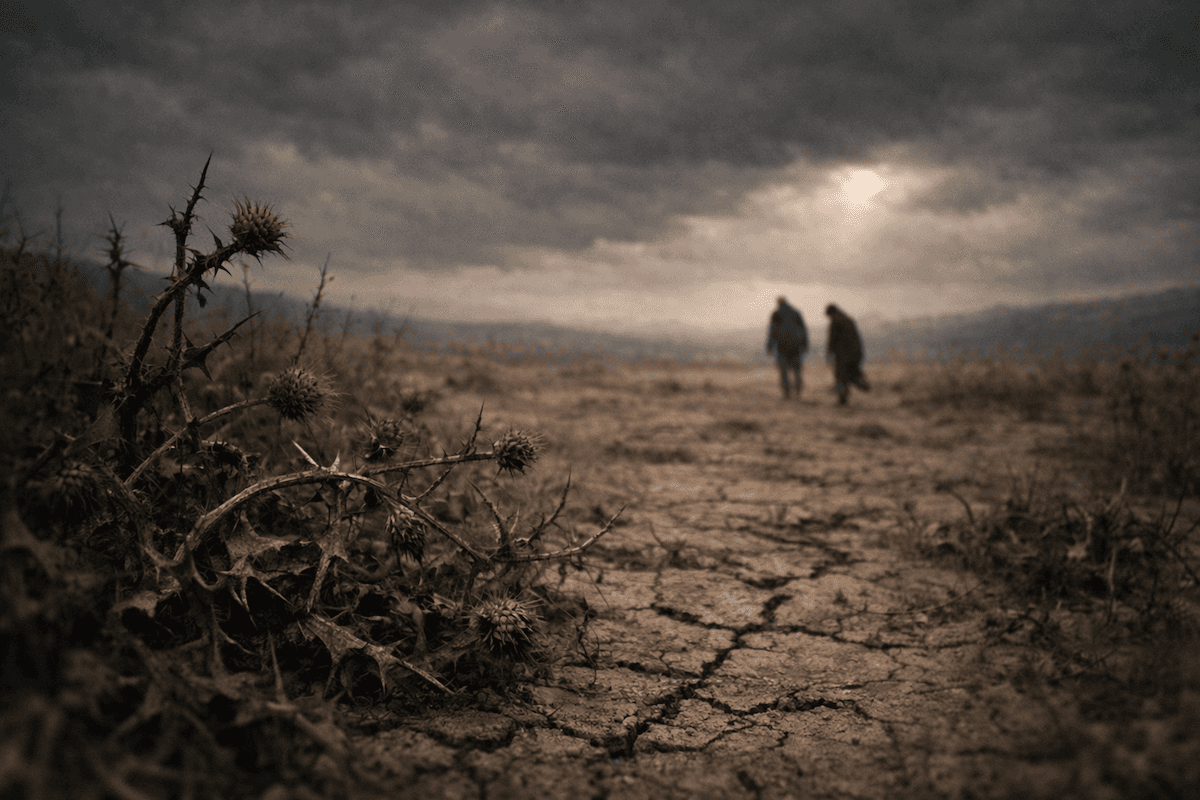
Image generated by Sora
Christmas Reflection
FAMILIAR CAROLS, TIMELESS STORY (Part 1)
“Joy to the World” 1719
Over the Christmas season, carols are played and heard everywhere. We sing them too. The tunes are familiar. Some traditional carols have been sung for centuries.
We know their familiar tunes but do we grasp the meaning of their words?
I have selected three carols, written in early to mid-18th C, sung for 300 years:
“Joy to the World” 1719
“O Come, All Ye Faithful” 1743
“Hark, the Herald Angels Sing” 1739
We want to look at their lyrics. While the tunes have been loved and sung for three centuries, their lyrics embody truths for all time, timeless truths.
These are truths we embrace and proclaim at Christmas, the true Christmas message.
THE FIRST CAROL
“No more let sins and sorrows grow
Nor thorns infest the ground
He comes to make His blessings flow
Far as the curse is found…”
Note the two highlighted words in the verse: “thorns” and “curse”— they bring us back to Genesis 3 when our first parents, Adam and Eve, disobeyed God, and brought sin into the world.
For their sin, God pronounced a curse on the ground:
“… cursed is the ground because of you; in pain you shall eat of it all the days of your life; thorns and thistles it shall bring forth for you; and you shall eat the plants of the field. By the sweat of your face you shall eat bread, till you return to the ground….” Gen 3.17-19
When our first parents chose to disobey God, God pronounced a curse on the ground. Thorns and thistles would infest the ground, and man would have to toil and sweat to get food from it.
One commentator calls this “the hunger of the wilderness”—any land left to itself will become a wilderness. Wild plants will take over. Or else, the land will become a desert.
No land left uncultivated becomes a garden. That is the curse pronounced upon the ground.
Farmers who depend on crops for their food and for livelihood understand this well.
If they do not work on their fields, the land will be overtaken by weeds and the weeds will choke and destroy their crops.
Unfortunately, we are not farmers, and we may not understand the work, the sweat, the pain, that go into the battle with the ground, to get food from it.
But what happens to the land is a reflection of what happens to people on the land.
This we may understand: no people left on their own, without good governance, hard work, and painful struggle—become good.
We only need to read the news each day to see the truth of this: the curse of thorns and thistles on the ground, both the planet earth and also on its inhabitants.
What has Christmas got to do with all this?
The words of this carol, “Joy to the World,” tell us the why of Christmas—why we need Christmas in the first place. The world lies under a curse, because of sin, first committed by Adam and Eve, and then by all subsequent generations, right down to our own generation.
Christmas is needed to reverse the curse. When God first made man, male and female, we read of the first thing he did:
“And God blessed them.” Gen 1.28
“And God saw everything that he had made,
and behold, it was very good.” Gen 1.31
Christmas is needed to bring everything back to what God had intended in the first place. Christmas is needed to reverse the curse, to reset us to the original settings.
“He comes to make His blessings flow
Far as the curse is found….”
Christmas is needed to turn the curse back to blessing.
Many of us are familiar with the verse from John 3.16:
“For God so loved the world, that he gave his only Son, that whoever believes in him should not perish but have eternal life.”
I find the following verse just as important:
“For God did not send his Son into the world to condemn [curse] the world, but in order that the world might be saved [blessed] through him.” John 3.17
“Joy to the World” is a familiar carol. This Christmas you will hear it many times. Don’t just listen to the tune, or sing the words.
Pay heed to the timeless truth it conveys, especially in its third stanza: the thorns that infest the ground, a reflection of the sin and evil that plague our world.
The carol speaks to us of the sin of humankind, the curse of the ground, the state of our broken world today.
Note how around Christmas, something horrific happens around the world, as if to remind us that, not everything is “peace on earth and goodwill towards all men”.
In 1988, it was the Lockerbie bombing, killing 243 passengers, on a Pan American flight, over Scotland.
In 2004, it was the Indian Ocean tsunami that took the lives of 230,000 people in 14 countries.
This year, it is the mass shooting at Bondi Beach in Australia.
That is why Christmas is needed. Thorns have infested the land and evil has infested humankind.
We cannot help ourselves. God has to do something—and he has done it! How did he do it?
For the answer, let’s now look at the second carol in the next post (Released tomorrow).
———————-
This is Part 1 of the series. Catch up on Parts 2 and 3 below.
Part 2 | Part 3