FAMILIAR CAROLS, TIMELESS STORY (Part 2)
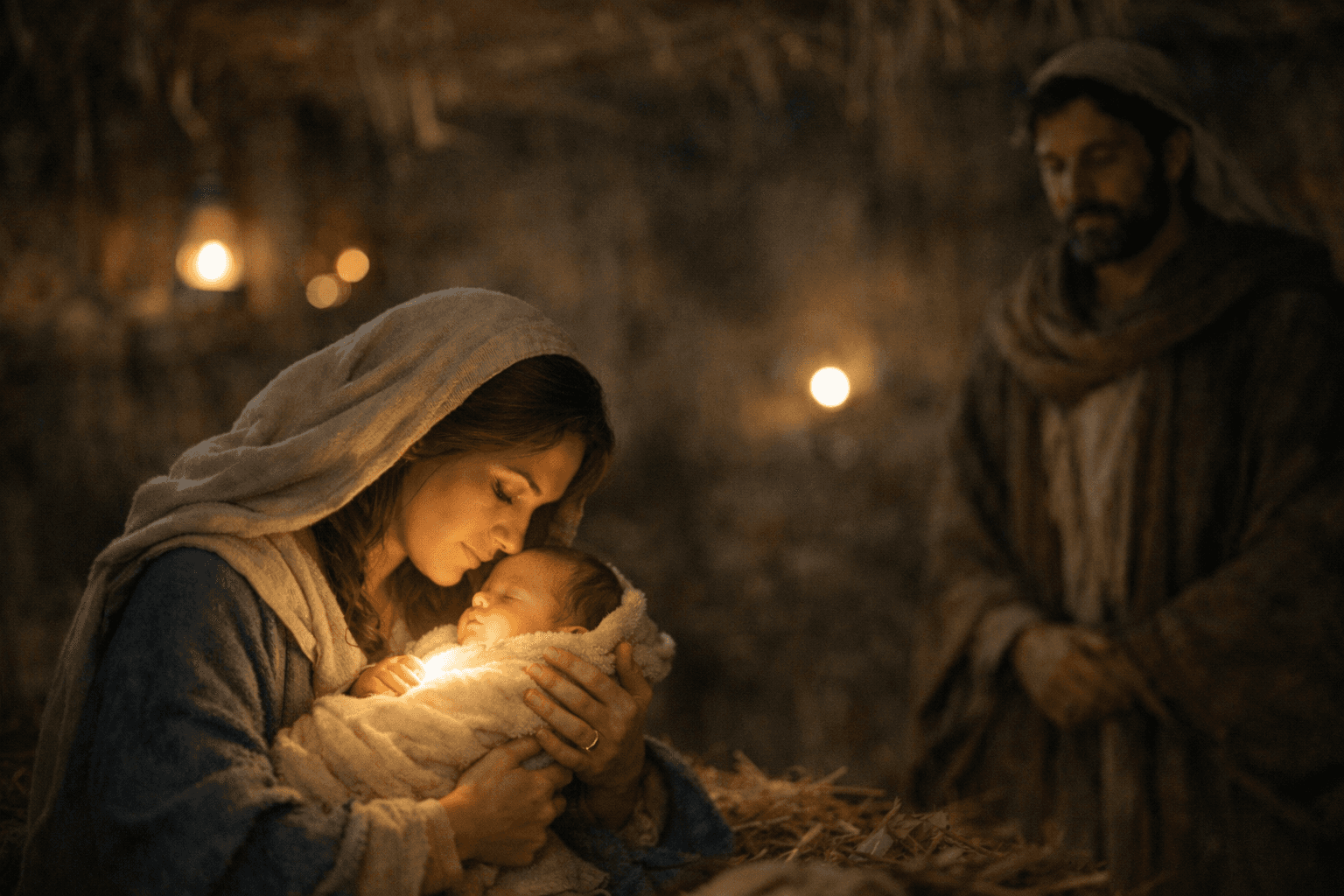
Image generated by Sora
Christmas Reflection
FAMILIAR CAROLS, TIMELESS STORY (Part 2)
“O, Come All Ye Faithful”
THE SECOND CAROL
We have looked at the Curse; let us now look at the Coming.
Let’s consider another familiar carol: “O, Come All Ye Faithful”.
“Yea, Lord, we great Thee, born this happy morning
Jesus, to Thee be all glory given
Word of the Father, now in flesh appearing…”
The lyrics here come from John 1.14:
“And the Word was made flesh, and dwelt among us.” John 1:14
John begins his gospel with these majestic words: “In the beginning was the Word, and the Word was with God, and the Word was God.” John 1.1
The Word (or the “Logos” in Greek) is none other than Jesus. Jesus was already in existence at the beginning, he was with God and he is God.
As God, he became Man on that first Christmas—then he grew up and lived among us. He was made flesh and dwelt among us.
“Word of the Father, now in flesh appearing….”
Or as one paraphrase puts it,
“The Word became flesh and blood, and moved into the neighbourhood.” John 1:14, The Message
Another gospel-writer Matthew says the same thing when he reminds us of the prophecy by Isaiah, spoken some 700 years earlier:
“All this took place to fulfill what the Lord had spoken by the prophet: ‘Behold, the virgin shall conceive and bear a son, and they shall call his name Immanuel’ (which means, God with us).” Matthew 1:22-23 ESV
Yes, God came to us, to be “God with us”. Note two remarkable aspects of this coming.
First, he came as an infant. Second, he came in a manger.
The infinite became an infant, so as not to intimidate us. If he had come as Almighty God, with thunder and lightning, we would run and hide. But who can resist a tiny, helpless babe?
He also chose to be born in a place meant for animals, and laid in their feeding trough. He identified himself with lowliest so all of humankind could come to him.
God did not want to intimidate us; he came as an infant. God wanted to identify with us, even the lowliest among us, so he came in a manger.
In that sense, God came as close as the divine could ever come to the human.
We could never go to Him, mortal and sinful as we are, so He came to us. He came to us as a little infant, grew up as a man, and appeared to us as one of us.
Some of you may be familiar with the modern carol, “Mary, Did You Know?”
It is a song sung to Mary as she cradles her newborn son:
Mary did you know/ That your baby boy
Would one day walk on water?
Mary did you know/ That your baby boy
Would save our sons and daughters?Did you know/ That your baby boy
Has come to make you new?
This child that you've deliveredWill soon deliver you
… Did you know/ That your baby boy
Has walked where angels trod?
When your kiss your little babyYou've kissed the face of God.
Yes, when Mary kissed her little baby, she kissed the face of God—think about that, let that thought sink in—of how close God had come to be with us!
God came to us, so we could see him, feel him, touch him. Christmas is God becoming Man.
The theological word is “Incarnation” which comes from the Latin “incarnatio” meaning “to be made flesh” or “to take on a human body”.
Our first carol tells us the problem we are in: we have sinned, we have fallen, we are under a curse.
Thorns and thistles have infested our ground, sin and evil have infested our world. Floods and fires have devastated our planet.
What did God do to turn the curse into a blessing again? He came personally to see to it.
Yes, he came personally to see to it. He did not send his archangel and assign the task to someone else.
He came in human flesh on that first Christmas day to deal with the curse we have brought upon ourselves.
So far, we have looked at two carols, familiar carols, with timeless truths, the Christmas message.
The first tells us why we need Christmas. The second tells us what God did at Christmas to meet our need.
The first carol tells of the Curse that came on the world as a result of man’s sin. It tells us why we need Christmas,
The second tells us of the Coming of Christ, God coming to deal with the Curse.
The Curse and the Coming—finally let’s look at the third carol which tells us of the Healing.
———————-
This is Part 2 of the series. Catch up on Parts 1 and 3 below.
Part 1 | Part 3